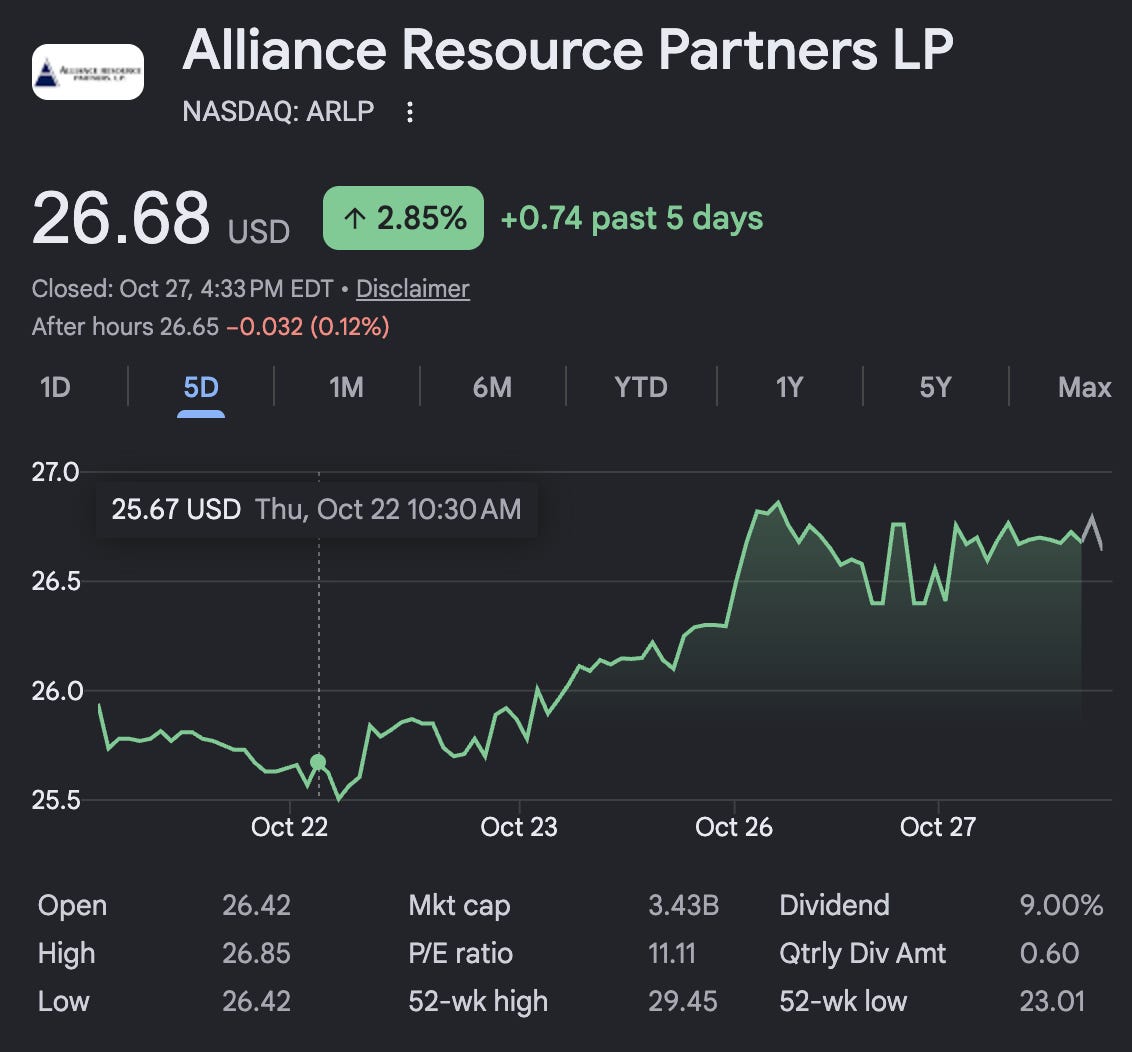
ARLP Q3 2026 earnings were out on Monday and the company reported excellent results and reiterated a strong trajectory. The market liked the call and units were still holding well above $26 as of market close on October 27.
Regular readers will know that I like ARLP a lot and it represents a chunk of my portfolio. The bottom line is that I still advise buying ARLP for long-term holders. Exercise some caution on increasing position size after earnings beats like on Monday, but Monday’s earnings call further deepens the case for owning some ARLP long-term.
The high-level takeaways from Monday’s earnings report were:
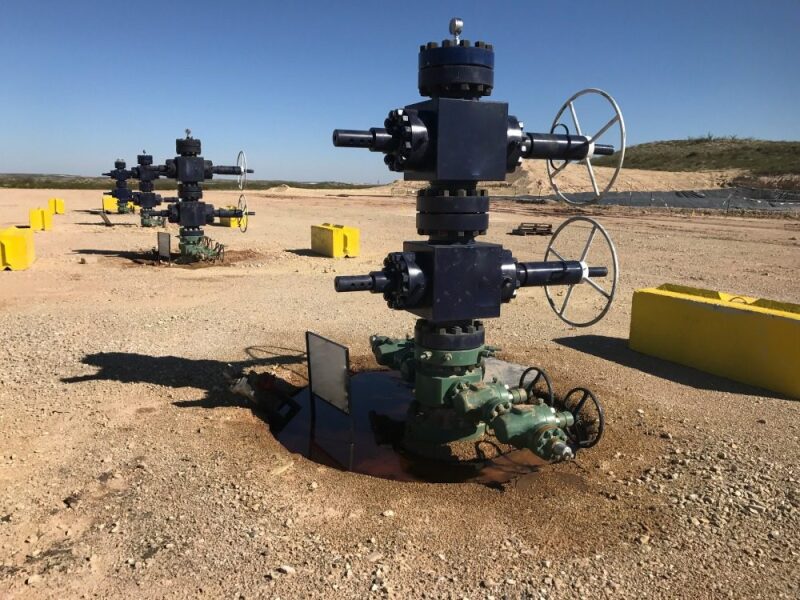
- Oil & Gas is playing a bigger role: Revenues were up 5.5% y/y on the back of rising coal sales and higher oil & gas royalties. Coal sales prices were down 8.3% y/y in Q3, and coal segment revenue dipped 1.5% y/y, so revenue growth was a story of higher volumes and depended substantially on the increasing contribution that O&G royalties make to ARLP.
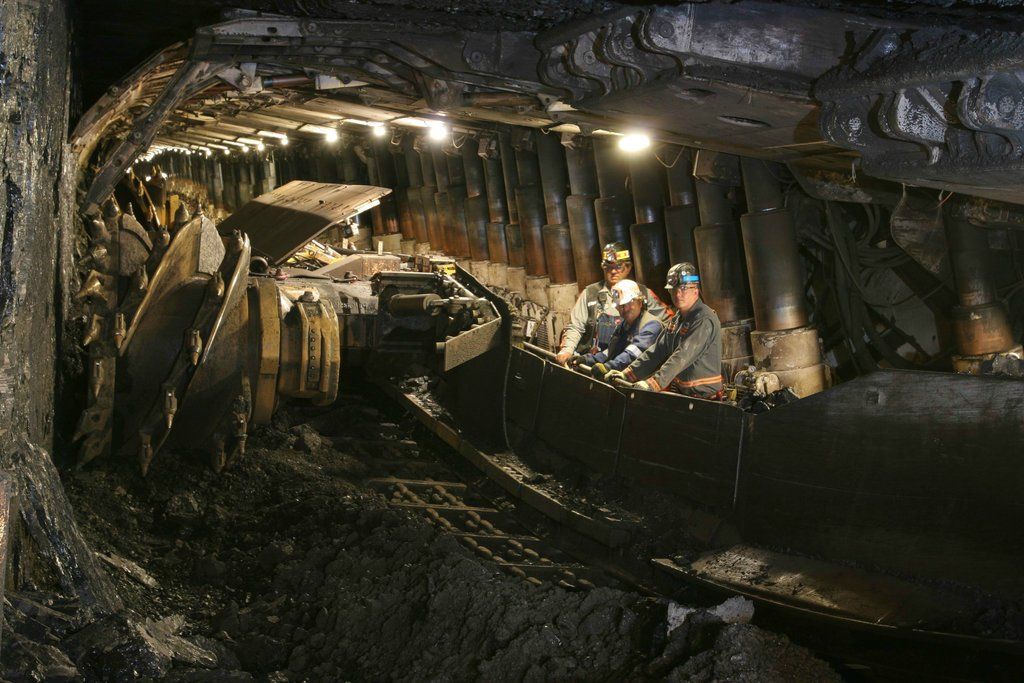
- ARLP is controlling costs: In 2025, I flagged that ARLP was making investments to improve efficiencies at mines like Tunnel Ridge, and that cost control would be the key to higher cash flows as US domestic coal prices are slow to move (and in some instances are capped by natural gas prices). In Q3, Illinois Basin cash costs (I call them cash costs, but technically they are “adjusted EBITDA expense per ton”) were down 10% y/y and 11% sequentially, largely because Hamilton’s longwall came back. Appalachia costs were flat sequentially, but down nearly 20% y/y as volumes shifted towards lower cost Tunnel Ridge tons.
- Earnings and cash flows surged: Net income (attributable to ARLP) was up 48.6% y/y, though Q3 included a couple of one-off, volatile changes: $16.5M Bitcoin fair-value gain and a $6.3M acquisition remeasurement gain. In the past my preferred metric to look at for ARLP has been free cash flow (FCF), but I’ve started to look at ARLP’s distributable cash flow (DistrCF) as my preferred metric to analyze investments in the partnership. DistrCF estimates ARLP’s recurring capacity to pay distributions by excluding working-capital timing effects and deducting a normalized maintenance-capex allowance. DistrCF of nearly $140M in Q3 was up ~28% on both a sequential and y/y basis.
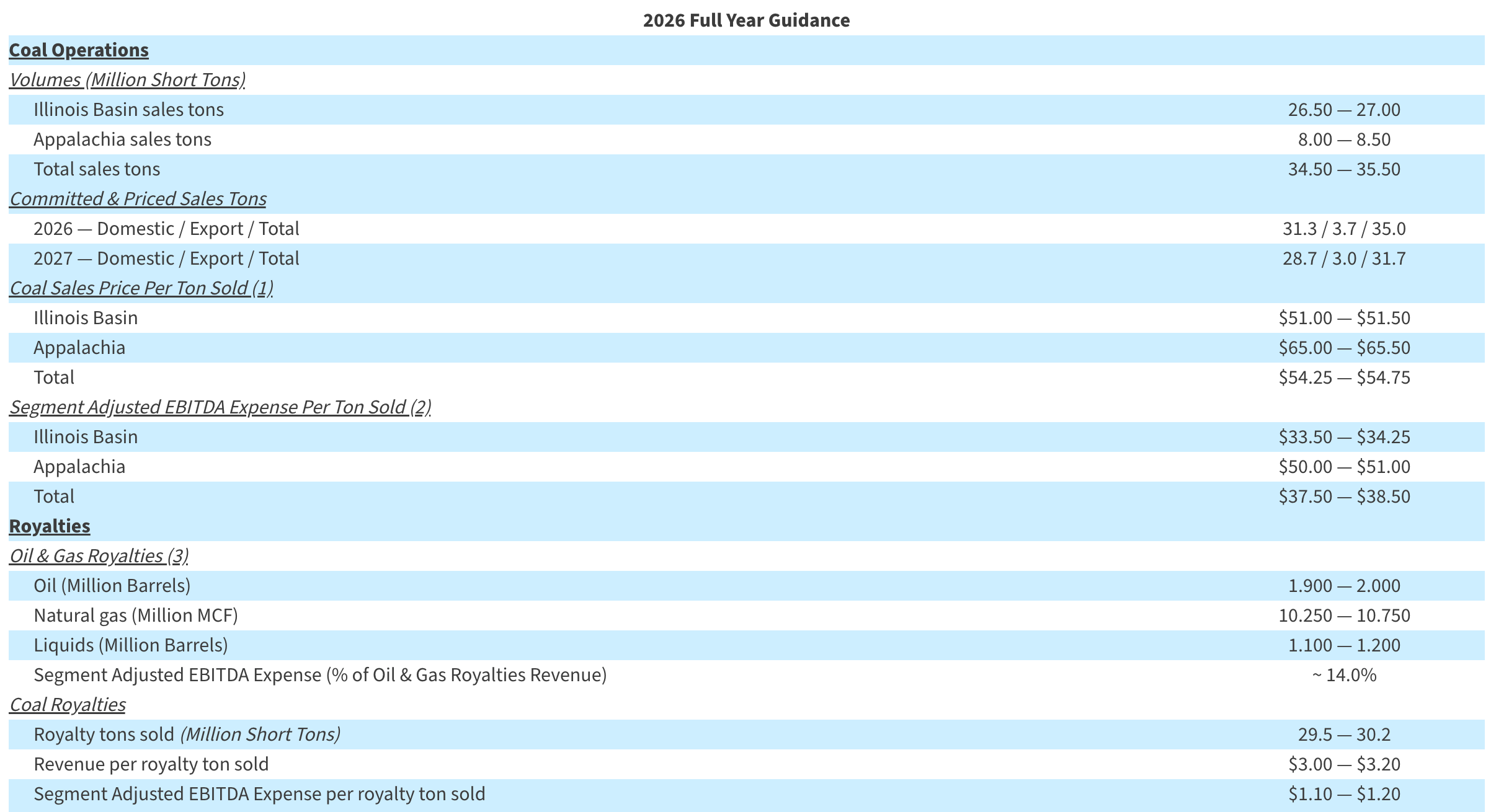
- Contracting is strong: ARLP signed another 4.2 million short tons (mst) through 2028 during Q3 and now has 31.7 mst already committed and priced for 2027, versus 35 mst of expected 2026 production. Year ahead commitments are running 2.6 mst above where they were at the same time last year.
- Earnings looking up: 2027 EBITDA looks like it will exceed full-year 2026 based on higher sales volumes from Hamilton and Mettiki, the potential for further improvement in mining costs, and recording a full year of contribution from the AllDale O&G royalties and the potential for modest incremental exports. The Hamilton longwall should operate all year and avoid the prolonged outage that it experienced in 2026, keeping output up y/y, which drives the potential for ARLP coal portfolio cash costs to dip again next year. While management didn’t see an outright bullish domestic thermal coal pricing environment next year, they are expecting slight price improvements in 2027 and larger price improvements in 2028.
ARLP’s current full year guidance for 2026 (and into 2027) is provided below for reference.
Some more specific takeaways from the call:
Mettiki
The Mettiki reopening was a key datapoint from the call and is an interesting case study in a few factors that impact ARLP. Mettiki had been effectively mothballed in early 2026 and ARLP took a $37.8 million impairment. Now it has signed a multi-year contract that will deliver 700,000 tons in 2027, will bring back roughly 150 miners, and ARLP expects Mettiki’s 2027 production to be ~550,000 tons higher than 2026. All good news.
A new contract with Dominion’s Mt. Storm power plant is what brought Mettiki and its Mountain View mine back to life, and it’s a good signal of blistering power demand from data centers, which is keeping coal plants and coal mines running. Dominion territory is ground zero for that demand as Dominion has some of the fastest-growing data center loads in the country. ARLP CEO Joe Craft talked up Mt. Storm as a great example of how coal plants can extend their retirements and it is. Dominion signaled in a recent filing that it will invest in the plant and models suggest that it could run to 2046! Note that operation into the 2030’s is very credible with some investment (and higher power and capacity prices in PJM), but I’d say that operating until 2046 may be a stretch. The generating units at Mt. Storm came online in the late 1960’s and early 1970’s and the units have an average age of 58 years. They can continue to run with investment to replace inefficient systems and worn metal, but there are limits. In ARLP’s notice on shutting down Mettiki, it noted unplanned outages at the plant were part of the reason to shut the mine and so I just want readers to appreciate that there is some equipment reliability risk with a coal plant of this age.
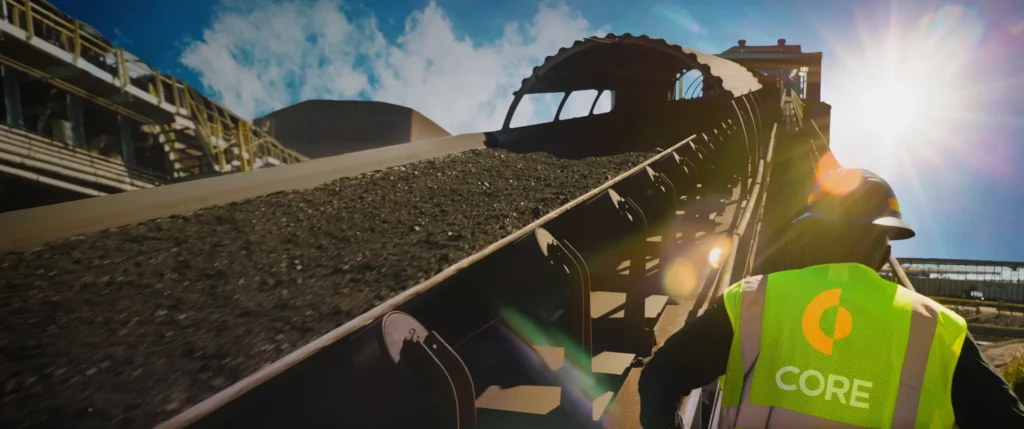
Mettiki reopening is also a very good example of the utility wanting to protect a nearby supply source, which is something we analyze when looking at how utilities make coal buying decisions. The only other miner serving Mt. Storm is Core Natural Resources (CNR), and Dominion likely wants to have a competitor to CNR for leverage in negotiations. As the US coal market has shrunk and over time will slowly shrink further, ARLP, CNR, Foresight and a few other miners will be the ones left. Dominion is rightly worried about increasing industry pricing power. That’s textbook economics for how the remaining players in a “mature” industry can still make money.
Analyzing the impact of Mettiki quickly, in 2027, 700,000 thermal coal tons from Mettiki at Q3 Appalachia segment gross margins of $16.10/st means about $11.3M in 2027 EBITDA (note that this is not incremental because Mettiki did produce some in 2026). I’d give that $11.3M figure a haircut to $10M as we don’t know Mettiki’s expected operating cost under its new room-and-pillar configuration and such mining is always less efficient and more costly than longwall mining (Mettiki’s former configuration). On the other hand, CEO Craft identified the potential for 150,000–200,000 additional export met coal tons from Mettiki, which would add roughly $5.25M in EBITDA (I’m assuming 175,000 tons at a very roughly-estimated margin of $30/ton, which I’ll refine further after talking with Matt). The Mountain View mine, Mettiki’s one asset, does produce a low volatile met coal, so margins on met tons should be higher than thermal coal margins.
Exports
Management highlighted a real export call option. ARLP has 3.0 million export tons contracted for 2027 and they could free up additional capacity to do a bit more. API2 prices rose strongly from about $105 to $140/metric tonne during Q3, and management says ARLP could produce another 0.5–1.0 mst without incremental capital if logistics permit (mainly from Hamilton). The constraint, which we’ve been discussing a bit in thecoaltrader Substack chat, isn’t mine capacity, it’s barges, ocean freight and inking deals with traders to move volumes. Traders handle export sales for ARLP because it’s outside of ARLP’s core functions, which makes sense, but I hope that ARLP moves quickly to lock in an additional 1 mst in sales while they can. I know the traders will get the coal moving if they can capture the API2-domestic coal spread.
We’ll be putting potential higher exports, as well as the improved 2027 cash flow outlook and Mettiki volumes in our model and will get that out by this weekend.
Distribution Coverage
Distribution coverage reached 1.76x, which is a nice buffer for ARLP. In 2025, the partnership cut distributions, which was framed as a way to strengthen the balance sheet and free up room for accretive acquisitions. Management delivered on that, investing in cost control measures, and acquiring the AllDale royalties, but distribution coverage was still a modest concern as it wasn’t much above 1x.
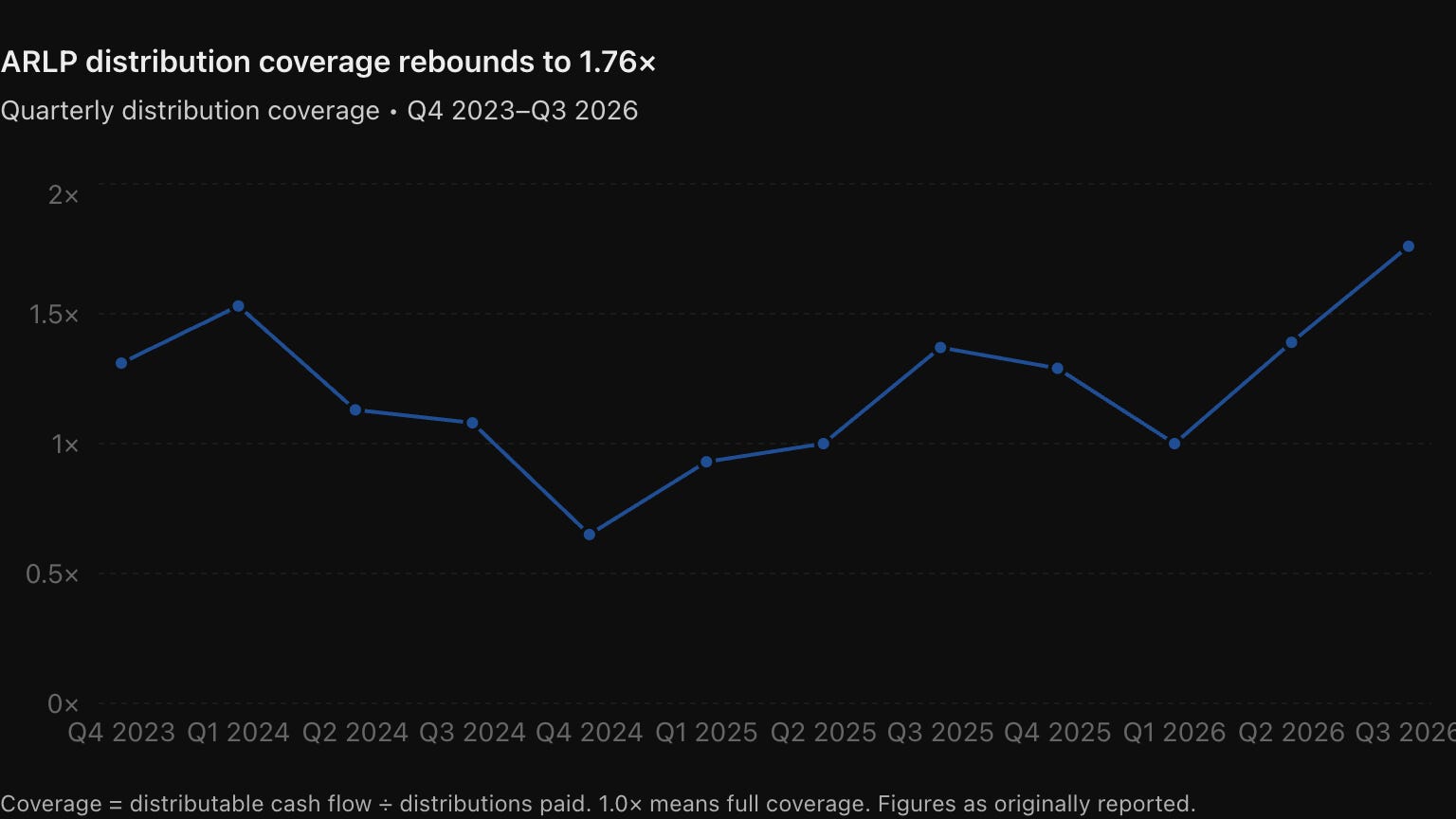
With quarterly distributions still at $0.60/unit (down from $0.70/unit in early 2025), distribution coverage was mechanically set to increase just from flat cash flows, but the Q3 coverage ratio reflects real improving cash generation from the business. With the quarterly distribution unchanged at $0.60, coverage rose from 1.36x in Q3 2025 to 1.76x in Q3 2026 on the latest comparable figures.
CEO Craft isn’t signaling an immediate distribution increase. He wants sustainable coverage above 1.5x and appears more interested in deploying surplus cash into mineral acquisitions. I think that strategy makes sense, given the strong performance of both coal and O&G royalty segments in the last quarter, ARLP’s solid performance in acquiring O&G mineral rights, and units are still yielding ~9% at the current time.
-JA