GM Coal Traders!
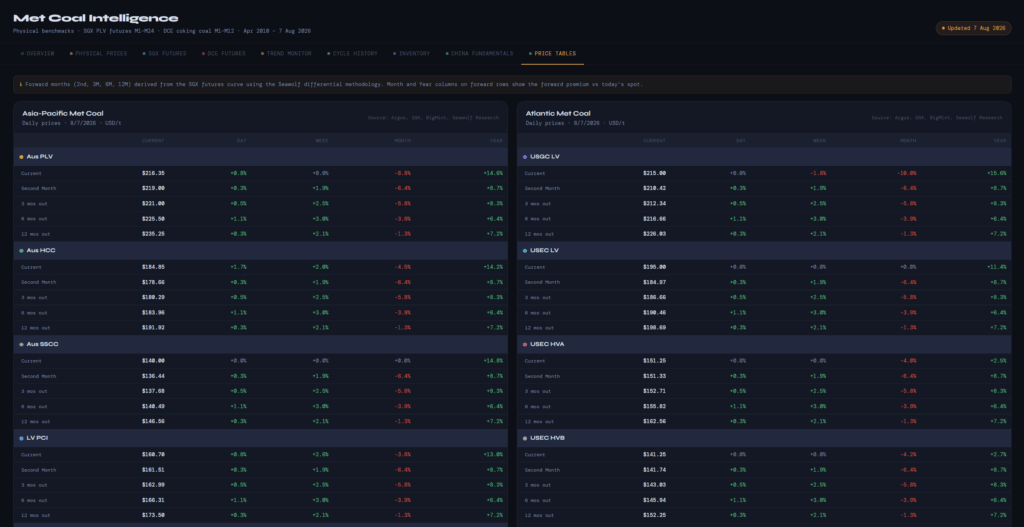
Coking coal prices finished the week on firmer footing, with Australian premium low-vol hard coking coal rising $1.70/t to $216.35/t FOB and second-tier material gaining $3.05/t to $184.85/t. A major producer sold 80,000t of Goonyella C for 15-24 September delivery at $214.50/t FOB Australia, providing fresh price discovery after several weeks of declining offers and subdued buying interest. The cargo was reportedly purchased by an international trader, while Indian mills remained largely absent from the spot market and continued to procure only on a needs basis.
Futures strengthened alongside the physical market, adding to signs that prices may finally be beginning to establish a floor following the sharp correction since June. September SGX PLV gained $0.75/t to $219/t, October rose $1/t to $221/t, November added $1.25/t to $222.25/t and December increased $1/t to $223.50/t. January 2027 climbed $2.50/t to $225.50/t, with gains extending further along the curve. The move was accompanied by a 3.05% rally in Dalian coking coal futures to RMB1,267.50/t and today’s physical Goonyella C trade at $214.50/t. The curve remains in contango, suggesting the market is pricing a gradual recovery rather than an immediate tightening in supply.
China continues to provide the more constructive signal. PLV prices edged $0.65/t higher to $234.40/t CFR north China while second-tier prices jumped $2.80/t to $204/t. Expectations for stronger seasonal steel demand in September and October appear to be improving sentiment, while the substantial correction in seaborne prices has made imported cargoes increasingly competitive. Australian coking coal shipments to China reached 2.4Mt in June, up 425% year over year as domestic supply constraints encouraged greater import demand. A fatal accident at Shanxi Coking Coal’s 2.7Mtpa Xiqu mine resulted in a production suspension this week, although market participants currently expect little broader impact on supply.
India remains considerably less supportive. Steelmakers are adequately covered and continue to purchase largely on a needs-only basis, while finished steel prices and mill margins remain weak. Mumbai HRC prices edged only Rs50/t higher over the week to Rs57,300/t. PHCC prices into India actually fell $1.10/t to $237.85/t CFR despite the increase in Australian FOB prices, while second-tier material rose just $0.30/t to $205.10/t. The divergence between China and India is becoming increasingly important: China appears willing to absorb more Australian coal as prices become competitive, while Indian mills remain content to sit on the sidelines.
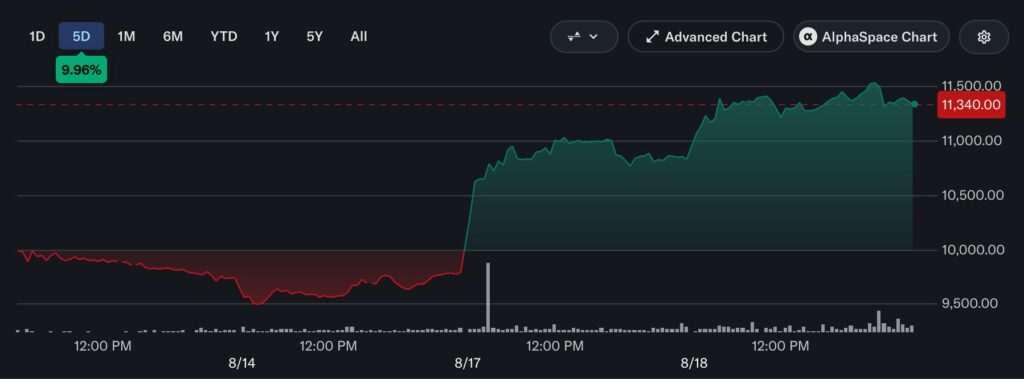
AMR also reported second-quarter results this morning, largely confirming the weaker outlook preannounced last month. AMR shipped 3.5Mt of coal during the quarter at an average met realization of $118.71/t, down from $124.39/t in the first quarter. Interestingly, costs improved to $103.07/t from $107.98/t, suggesting weaker pricing and lower volumes rather than mine-cost deterioration drove much of the earnings pressure. Adjusted EBITDA fell to $25.6 million from $30 million in Q1, while operating cash flow improved to $39.9 million. Capital expenditures totaled $45.1 million.
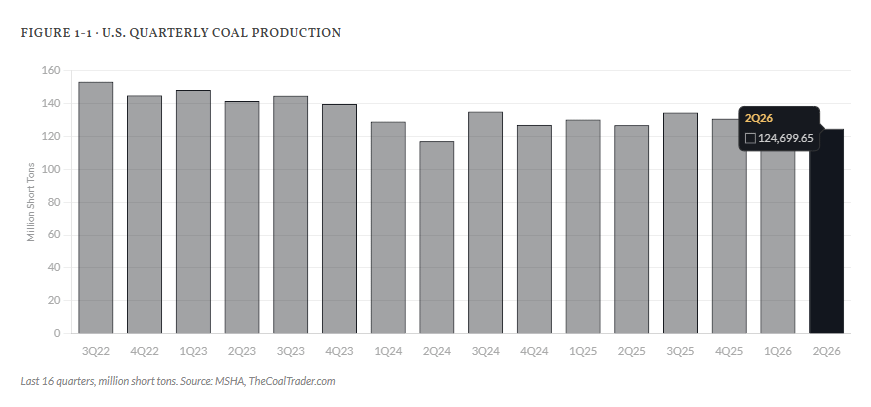
Due to the preannouncement we couldn’t get a preview out, but after adjusting for MSHA production, our results were once again pretty close to actuals. I’ll adjust forward guidance next and then we’ll take a look at what the back half of the year might look like.
The pricing mix provides a particularly useful window into the weakness of the Atlantic market. AMR’s 0.9Mt of domestic met sales realized $134.37/t and 0.7Mt of Australian-indexed export sales realized $143.82/t. By contrast, the company’s 1.5Mt of export sales under other pricing mechanisms realized just $109.08/t. Those tons represented nearly half of AMR’s second-quarter met coal sales and weighed heavily on its blended realization. It’s a pretty stark illustration of just how weak non-Australian-indexed export pricing has become for US producers. If anyone wants to grab a pitchfork and meet me at Platts’ offices, feel free.
Management maintained its reduced 2026 met shipment outlook of 13.2-14.0Mt while guiding met costs to $103-107/t. The lower volume forecast incorporates reduced efficiency at Dominion Terminal Associates following June’s stacker-reclaimer damage, with AMR utilizing the terminal’s remaining throughput capacity while insurance claims and discussions regarding replacement of the equipment continue. Roughly 70% of expected 2026 met volumes are already committed and priced at an average $128.17/t, including 3.8Mt of domestic coal at $136.18/t and 5.7Mt of exports at $122.77/t. That leaves roughly 30% of expected met volumes exposed to future market pricing.
For now, the combination of firmer Chinese futures, improving Chinese import economics, a stronger SGX curve and fresh physical trading suggests the seaborne market may finally be beginning to establish a floor after the sharp decline from June highs. That’s not yet the same thing as a durable recovery. Indian demand remains largely absent, Chinese steel mill margins remain uncertain and China’s third round of coke price cuts took effect today. But after several weeks in which sellers were chasing an increasingly thin bid lower, the balance of evidence looks considerably more constructive heading into next week.
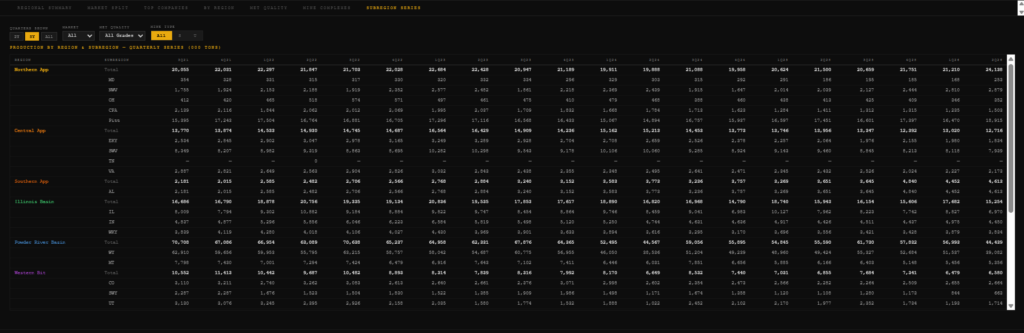
And finally, yet another reminder that we are raising subscription costs soon after adding 10 new data tools (including Met Coal Intelligence, featured above) and features on the website over the past couple months. You can still lock in the current website rate of $399/year and have access to anything else we develop for the next 365 days by going to The Coal Trader’s Subscription Page and signing up for an annual plan.
-MW