Yes, we have been watching coal’s role during Winter Storm Fern, like other electricity and fuels nerds stuck inside over the last week or so. We will be writing more about how coal performed this winter, but the quick take is that it has fared very well and helped multiple US grids from having serious issues.
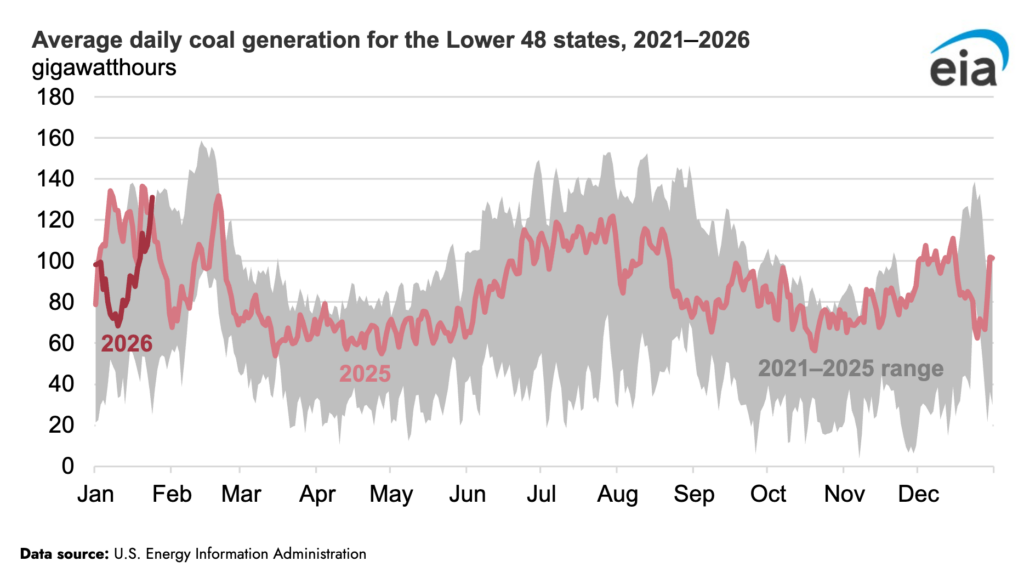
The EIA reported this week that the U.S. electric grid leaned heavily on fossil fuels during Winter Storm Fern, with coal-fired power generation jumping 31% w/w during the week ending January 25. This surge reflects a significant shift in the generation mix as extreme cold and winter weather swept from Texas to New England, driving demand and straining grid resources.
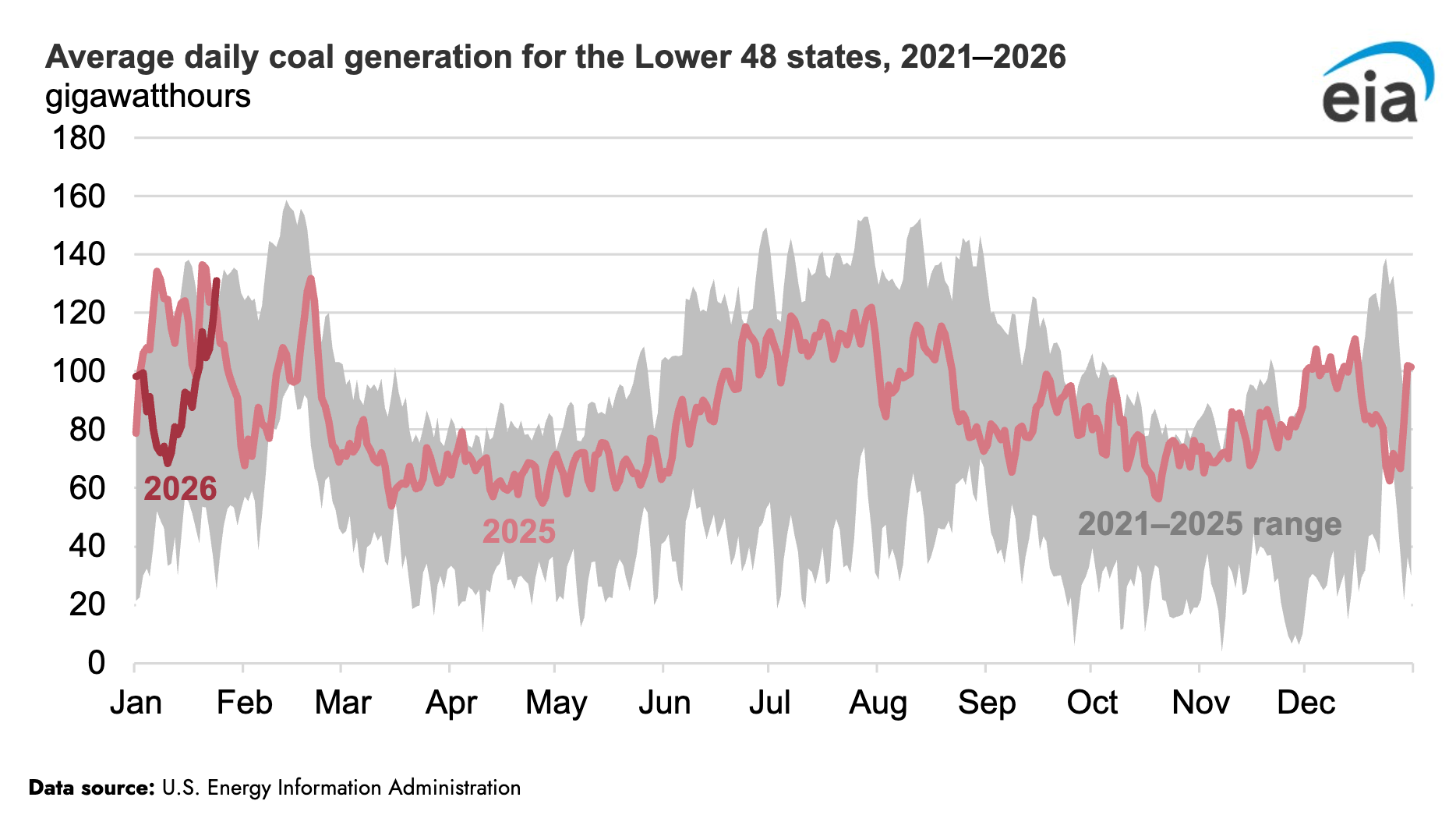
Coal-fired power hit 40% of generation in MISO at peak demand and 18% in ERCOT. Coal hit 24% of generation in PJM during cold weather when renewables output dipped. Data on specific outage causes by fuel type aren’t fully detailed yet from official grid operators, but we will be looking into that when the data is available. There were coal plant outages during the cold weather such as at the DB Wilson coal plant in MISO that went offline due to a boiler leak, but coal seems to have fared better than gas-fired generation.
Natural gas supply constraints were a real factor during Winter Storm Fern, driven by pipeline congestion and heating priority, localized freeze-offs and price-driven fuel unavailability. Coal plants were materially less exposed to these risks because of On-site fuel storage, independence from real-time gas delivery, and the ability to run continuously through multi-day cold events.
According to the EIA data covering last week, natural gas generation output in the Lower 48 states also rose by 14% w/w, while solar, wind and hydropower generation declined compared with the previous week. Nuclear generation was largely unchanged. Coal’s share of total electricity generation in the Lower 48 climbed to about 21%, up from 17% the week before, making it the second-largest source behind natural gas at 38%. This pattern illustrates coal’s continuing role as a dispatchable “reliability” fuel when other sources falter under extreme weather.
The EIA noted that grid operators often call on coal plants to increase output during extreme weather events, especially when demand surges or renewable output drops — a repeat of patterns seen in previous cold snaps such as February 2021 and January 2025.
To help maintain reliability, the U.S. Department of Energy (DOE) issued emergency authorizations under Section 202(c) of the Federal Power Act that allowed generation units to operate without regard to normal emissions limits. These temporary waivers covered regions including New England, the Mid-Atlantic and Texas, and allowed operators like ISO New England and PJM Interconnection to keep necessary plants running through early February. DOE’s broad emergency actions underscore the pressure on power systems as winter conditions tightened supply margins.
In New England, the grid operator warned that conditions would remain tight, with narrow energy margins forecast from January 30 through February 1. Extreme cold also boosted overall energy consumption and peak demand, prompting increased use of stored fuel oil and liquefied natural gas inventories. In that region, electricity prices are highly sensitive to natural gas market dynamics; recent spot prices reached record highs, exacerbating cost pressures on generators and consumers alike.
Interestingly, during the storm oil-fired generation, though normally a very small share of U.S. power generation, briefly surpassed natural gas in New England as dual-fuel plants switched away from gas when prices spiked or supply was constrained.
We don’t hate wind and solar over here at TCT. It was great to see behind-the-meter solar come in at times on the ISO-NE grid, for instance. But we recognize the realities of the US power system. And, overall, the data show that during Winter Storm Fern, traditional fossil fuel sources — particularly coal — played a key reliability role at a time when weather challenged output from wind, solar and hydropower, and boosted grid stress across much of the country.
For our in-depth analyses, please consider subscribing to TheCoalTrader on Substack or at TheCoalTrader.com