Coal Prices
- Premium Low Vol (FOB Australia) $366.00/mt (-1.00)
- CFR China PLV equivalent (Oct ’23) $322.00 (+2.50)
- PLV China Netback $281.85 (-0.45)
- PCI (FOB Australia) ~$204.00 (-1.00)
- Low Vol HCC (USEC) $272.00 (0.00)
- High-Vol A (USEC) $292.50 (0.00)
- High-Vol B (USEC) $245.00 (0.00)
- CFR South China (5,500) $121.25/mt, (+0.25)
- Kalimantan (4,200) $60.60 (+0.25)
- FOB Newcastle (6,000) (Oct ’23) $142.25 (-1.50)
- FOB Newcastle 20% Ash (5,500) $109.80 (+0.50)
- CFR India West (5,500) $125.65 (+1.00)
- CIF ARA (6,000) $149.00 (-4.00)
- Richards Bay (5,500) $115.00 (-4.00)
- Baltimore 3% Sulfur (6,900) $96.75 (+2.50)
- Hampton Roads 1% Sulfur (6,000) $119.05 (0.00)
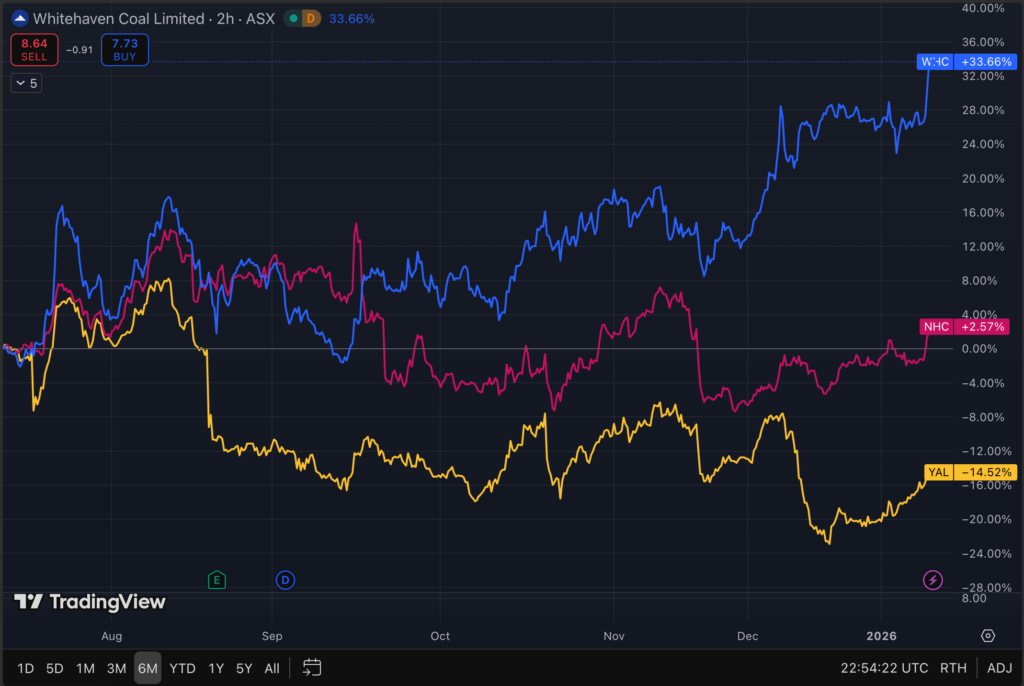
Whitehaven Finally Announces BMA Acquisition
Whitehaven Coal, an ASX-listed pure coal company, has become the preferred bidder for BHP’s non-core Blackwater and Daunia metallurgical coal mines in a deal estimated to cost up to $4.1 billion. The acquisition, slated for completion by June 2024, will make Whitehaven the largest ASX-listed coal producer with an anticipated ROM of 40 million tonnes per year. The deal includes an upfront cash consideration of $2.1 billion, followed by additional tranches over three years. The coals from these mines, especially Blackwater, are sought after in premium markets. Daunia produces second-tier hard coking coal and PCI, while Blackwater is expected to have a production lifespan exceeding 50 years. The acquisition will be funded through a combination of cash, a $900 million bridge facility, and future cashflows from the expanded business. The completion of the deal is subject to regulatory approvals and mining lease transfers.
This acquisition is seen as a way to mitigate risks for both parties. For Whitehaven, it helps reduce its exposure to thermal coal, which is facing increasing scrutiny due to environmental concerns. Additionally, the deal provides Whitehaven with greater operational diversification, as half of its production will now come from Queensland. The agreement is also viewed as favorable for BHP, as it allows them to manage climate and rehabilitation risks associated with the mines.
Whitehaven Coal, an Australian mining company, reported a 34% year-on-year increase in equity raw coal production, totaling 4.26 million tonnes in July-September. Commercial coal production reached 3.55 million tonnes, up 4% from the previous year and 13% from the previous quarter. The rise in output was primarily attributed to higher production across various sites and a ramp-up in production at the Narrabri coal mine. Although Narrabri’s raw coal output for the third quarter was down 6% from the previous year, it surged by 238% compared to the April-June period. Equity coal sales rose by 4% year-on-year but fell by 6% from the previous quarter to 3.08 million tonnes. The average selling price was A$224 per tonne, down from A$581 per tonne the previous year and A$264 per tonne in the preceding quarter.

Thermal Coal News
Neutral to Bullish: Despite a decrease in China’s buying activity, Asian thermal coal prices remained stable on Oct. 17 due to ongoing supply constraints from Indonesia. Chinese buyers are expecting tighter supply in the coming months, as no miner has received approval for revised output quotas. Demand from China remains strong, and they’ve been stockpiling for November. Indian buyers are making inquiries, particularly from the power sector, but are hesitant to match high market rates. Enquiries in India are outpacing actual trades. Coal stockpiles at Indian power plants are currently at 20.58 million mt, enough for less than 8 days of coal burn.
Bullish: As winter approaches, the development and reform committee of Yulin, China’s second-largest coal city, expects tight spot thermal coal supplies, particularly from November onward. Stringent safety checks in major producing regions in September, along with increased demand from non-power industries amid an improved macro-economic situation, contributed to rising coal prices. By the end of September, mixed coal prices averaged 819 yuan per tonne, a 15.03% increase from the previous month. The price of Yulin’s 5,800 Kcal/kg NAR thermal coal reached 847 yuan per tonne, up 14.6% from the end of August.
Shanxi province, the largest coal-producing base in North China, aims to maintain coal production by its state-owned coal enterprises at a stable level of 700 million tonnes in 2023. This initiative is to support national energy security, especially in light of the anticipated surge in coal demand as several northern and northwestern regions in China enter the winter heating season in early to mid-November. This move is crucial to ensure an adequate coal supply during this period.
Neutral: China’s coal production remained nearly flat in September compared to the previous year, but saw a 6% increase from August. For the first three quarters of the year, domestic coal production rose by 3% compared to the same period in 2022. Industrial demand and rising prices supported coal demand. Despite a better-than-expected economic performance in the third quarter, expectations of prolonged safety inspections may hinder a return to the record pace of coal production achieved in March.
Metallurgical Coal News
Neutral to Bearish: The Atlantic metallurgical coal market observed increased interest for December US cargo. Forward pricing saw significant declines, affecting sentiment for spot trade. The gap between forward prices and the physical premium for low-volatile FOB Australia index widened. US high-vol A prices fell, with no physical trade data available. High-vol B prices remained stable. The spread between US high-vol A and high-vol B narrowed. US low-volatile HCC price is now at a $95/mt discount to the Australian PLV Index on FOB terms. Derivatives prices experienced sharp falls. In the SGX, 40,000 mt in futures were cleared for various months up to December 2024.
Neutral to Bearish: On October 17, Asian metallurgical coal FOB prices showed a slight decrease, the first dip since mid-July, due to improved spot availability. The benchmark Premium Low-Vol Hard Coking coal was $1/mt lower at $366/mt FOB Australia, while the delivered CFR China price remained steady at $297/mt. In the FOB Australia market, an offer was heard at $367/mt for globalCOAL HCCA Branded coal with Dec. loading. Lukewarm buying interest was observed for Australian LV HCC Carborough Downs. In the Chinese met coke market, a deal was heard at $354/mt FOB China for 50,000 mt of Chinese CSR 65/63 met coke. Another European steel mill concluded a deal for Columbian met coke at around $320/mt FOB Columbia. In the Indian met coke market, tradable levels ranged from 37,500-38,000/mt ex-plant levels. Demand among Indian end-users for seaborne met coke was lackluster due to current offer prices.
A trade at $340.00/t FOB for a 40,000 t cargo of HCCA Branded metallurgical coal in December did not provide the market with price certainty. The trade, which followed a series of price adjustments, is viewed with skepticism due to the on-screen behavior and market conditions.
BHP, the Australian mining company, produced approximately 5.6 million tonnes of metallurgical coal in Queensland, Northeast Australia, in the period from July to September 2023. This reflects a 16% decrease in output compared to the same period last year. Factors contributing to this decline include planned maintenance at the Goonyella mine wash plant, mining in higher strip ratio areas, an extended longwall move at Broadmeadow, and a stoppage at Peak Downs. BHP’s coking coal assets in Queensland are managed by the BHP Mitsubishi Alliance (BMA), a 50-50 joint venture with Mitsubishi Development. Thermal coal production at New South Wales Energy Coal (NSWEC) increased by 38% to 3.6 million tonnes, benefiting from favorable weather and eased labor constraints. However, thermal coal realizations fell by 20% in the same period. BHP has also noted the impact of a recent increase in coal royalties by the NSW government.
Mongolian Mining Corporation (MMC), a Hong Kong-listed coking coal producer based in Mongolia, reported an 83% increase in raw coal production in the third quarter compared to the previous year. MMC and its subsidiaries mined 3.51 million tonnes of raw coal during the July-September period, a 15% decline from the previous quarter. The company and its affiliates processed 3.90 million tonnes of raw coking coal in the third quarter, up 44% from the previous year and 7% from the preceding quarter. Washed coking coal output reached 1.93 million tonnes, marking a 68% year-on-year increase and a 19% rise compared to the second quarter. Sales of washed coking coal were 1.75 million tonnes, up 17% year-on-year and 11% from the previous quarter. MMC operates the Ukhaa Khudag and Baruun Naran mines in South Gobi province, with Ukhaa Khudag equipped with three coal preparation and washing plants with a total raw coal processing capacity of 15 million tonnes per year.
Steel & Iron Ore News
Bullish: The World Steel Association has released its Short Range Outlook (SRO) for 2023 and 2024. They predict that steel demand will rise by 1.8% in 2023, reaching 1,814.5 million metric tons (Mt) after a 3.3% contraction in 2022. Additionally, they forecast a 1.9% increase in steel demand in 2024, reaching 1,849.1 million metric tons (Mt).
Bullish: In September, Vietnam witnessed its highest construction steel sales of the year, reaching 958,500 tonnes, a notable 9% increase from the previous month and a 4% rise year-on-year. Leading companies like Hoa Phat and Vietnam Steel Corporation (VNSteel) also experienced their highest sales for the year. This surge is attributed to ongoing transportation projects like the North-South expressway and new airports. However, despite rising steel prices, the industry still grapples with low demand, with a 20% decrease in sales compared to the previous year. The market has remained relatively stable in September.
Russia’s Ministry of Natural Resources has unveiled plans to allocate approximately 88 billion roubles (about $902.4 million) for geological exploration from 2024 to 2026. These investments aim to support and stimulate the development of the industry. The focus will be on strategic raw materials like lithium, titanium, manganese, niobium, and rare earth metals, which are crucial for the national economy.
Bullish: US hot-rolled coil (HRC) prices have surged due to tight supply and extended lead times, pushing prices up by $50/short ton to $750/st ex-works. This marks an increase of $90/st from their September lows, but prices remain 38% down from their April high. Integrated steelmaker Cleveland-Cliffs set an HRC price minimum of $750/st in September. Mill lead times have reached 6.9 weeks, indicating strong demand, while prices for the rest of the year will depend on booked contract tons and availability as the market enters the holiday season. The United Auto Workers strike is also being closely monitored for its impact on the industry. Meanwhile, the US plate assessment fell by $25/st to $1,405/st ex-works due to lower mill offers, with prices affected by steelmaker Nucor’s attempts to hold prices at $1,530/st. Demand remains steady, but some projects, like wind farms, are under threat due to rising raw material costs.
Power & Energy News
Bullish: Japan’s Kansai Electric has indefinitely postponed the restart of its 870 MW No. 3 Takahama nuclear reactor due to issues found in the steam generators during scheduled maintenance. The initial plan was to resume operations on December 6. This delay could impact Kansai Electric’s use of LNG, coal, and oil for thermal power generation during the high-demand winter period from December to March. Additionally, three other reactors are scheduled for maintenance in the coming months, which could affect electricity supply in the region. Nuclear power plays a crucial role in stabilizing electricity supply during Japan’s winter months.
The U.S. offshore wind industry is facing challenges in meeting President Joe Biden’s target of deploying 30 gigawatts of capacity by 2030. Setbacks including cost revisions and regulatory issues have pushed the industry further from this goal. BloombergNEF, which initially had doubts about the target, now estimates total U.S. capacity to reach just 16.4 gigawatts by 2030. Developers are struggling with rising construction costs, and several projects have sought to renegotiate deals or have been canceled altogether. Despite these challenges, the White House remains committed to advancing offshore wind opportunities.
Since the start of the European energy crisis in 2022, the number of German households experiencing “energy poverty” has surged, says a report by the Expert Council for Consumer Affairs. It revealed that the proportion of households spending over 10% of their income on energy, the threshold for energy poverty, rose from 26% to 43%. The report suggests that government support packages have provided some relief. Low-income individuals tend to face higher energy costs due to renting and residing in poorly insulated apartments. The German government has implemented aid measures to mitigate the impact of high energy prices, particularly for lower income groups. Caps on gas and electricity prices are proposed to be extended.