The Coal Trader

Whitehaven Coal News Coal Markets

Coal News & Price Data – April 19, 2024 – Whitehaven Updates on Production

Daily Coal Prices – EOD April 18, 2024

  • Premium Low Vol (FOB Australia) $254/mt (+2.00)
  • CFR China PLV equivalent (Apr ’23) $251.00 (unch)
  • Second-Tier HCC (FOB Australia) $213 (+3.00)
  • Low Vol PCI (FOB Australia) $160 (+16.00)
  • Semi-Soft (FOB Australia) $161 (+2.00)
  • Low Vol HCC (USEC) $218 (unch)
  • High-Vol A (USEC) $220 (unch)
  • High-Vol B (USEC) $195 (unch)

  • FOB Newcastle (6,000) (Apr ’23) $129.60 (unch)
  • FOB Newcastle 20% Ash (5,500) $88 (unch)
  • CFR India West (5,500) $106 (unch)
  • Kalimantan (4,200) $54 (unch)
  • CIF ARA (6,000) (Apr ’23) $120.35 (+1.25)
  • Richards Bay (5,500) $90 (unch)
  • Baltimore 3% Sulfur (6,000) $72 (unch)

Whitehaven Updates on Production

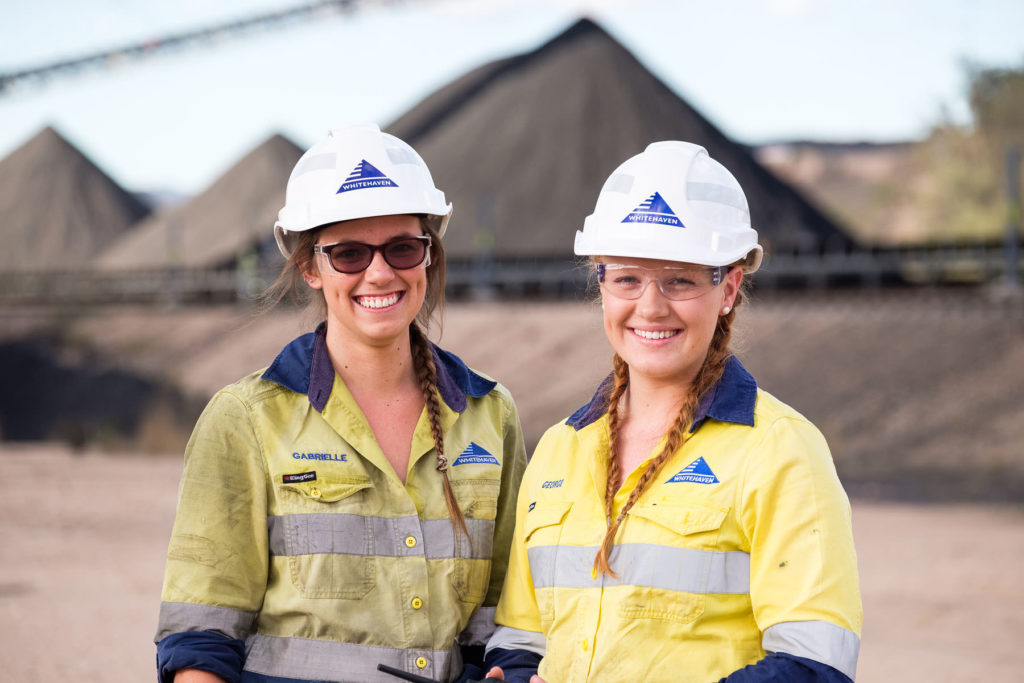
Whitehaven’s January-March report shows increased production but decreased sales. The firm shifted to higher-grade thermal coal sales, with sales volumes at 83% high-grade. Challenges at the Narrabri mine affected production. Whitehaven maintains its sales guidance for the fiscal year but expects higher costs due to lower output from Narrabri. The acquisition of BMA’s Blackwater and Daunia mines is finalized, aiming for 70% metallurgical coal sales post-acquisition. Whitehaven sees strong support for high-calorific thermal coal in Asian markets amidst Russian export sanctions and India’s demand growth. More Here

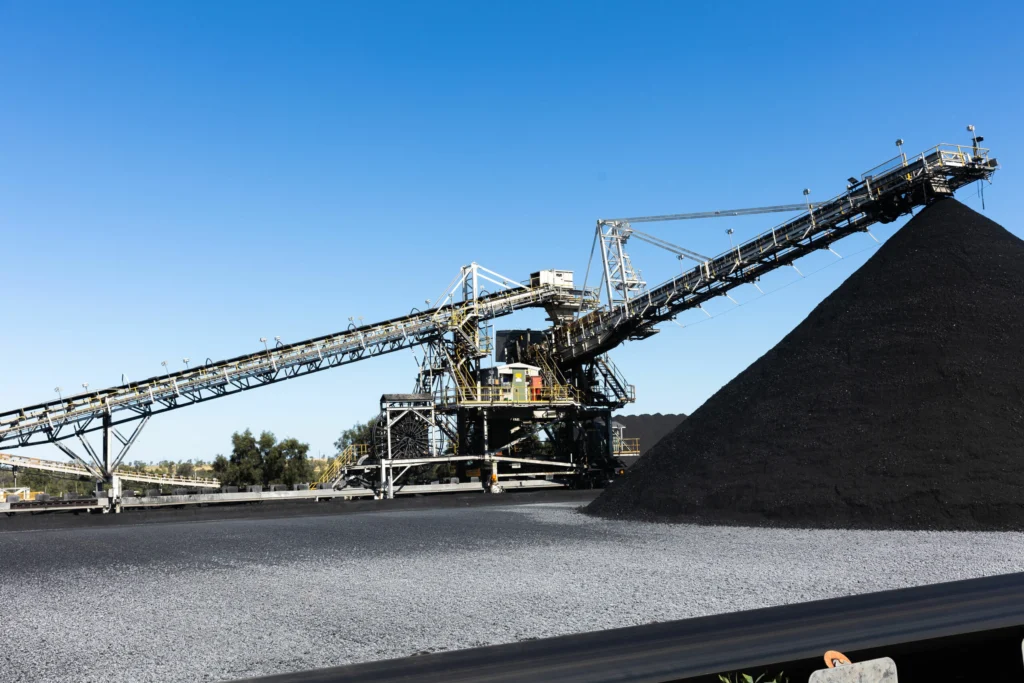
Whitehaven reported a production volume of 3.868 million tons of saleable coal from January to March 2024, up 6.0% from the previous year. Maules Creek mine output reached 2.347 million tons, exceeding the previous year by 40.6%. Narrabri mine production stayed at 657,000 tons, down 45.7% due to geological issues. WHC’s coal sales volume totaled 3.833 million tons, a 7.3% decrease from the previous year.

Whitehaven reported that the average sales price of metallurgical coals exported from NSW from January to March 2024 was US$213/MT, up by US$47 (28.3%) from the prior period. Semi-soft coking coal/PCI coal contract price increased to US$279, up by US$1 (0.4%). The average sales price of NSW-origin thermal coal was US$136, down by US$6 (4.2%) from the prior period.

Whitehaven CEO Paul Flynn notes improved labor availability but rising wages. The company faces challenges post-acquisition of BHP’s Daunia and Blackwater mines. Despite abandoning autonomous truck trials due to safety concerns, Whitehaven remains open to the idea. They aim to benefit from the long-term metallurgical coal market. March quarter results were weak, impacted by lower-than-expected production at Narrabri. However, Whitehaven anticipates improved performance from the newly acquired mines. Year-to-date production is up 12%. Sales are lower but coal prices slightly increased. More Here

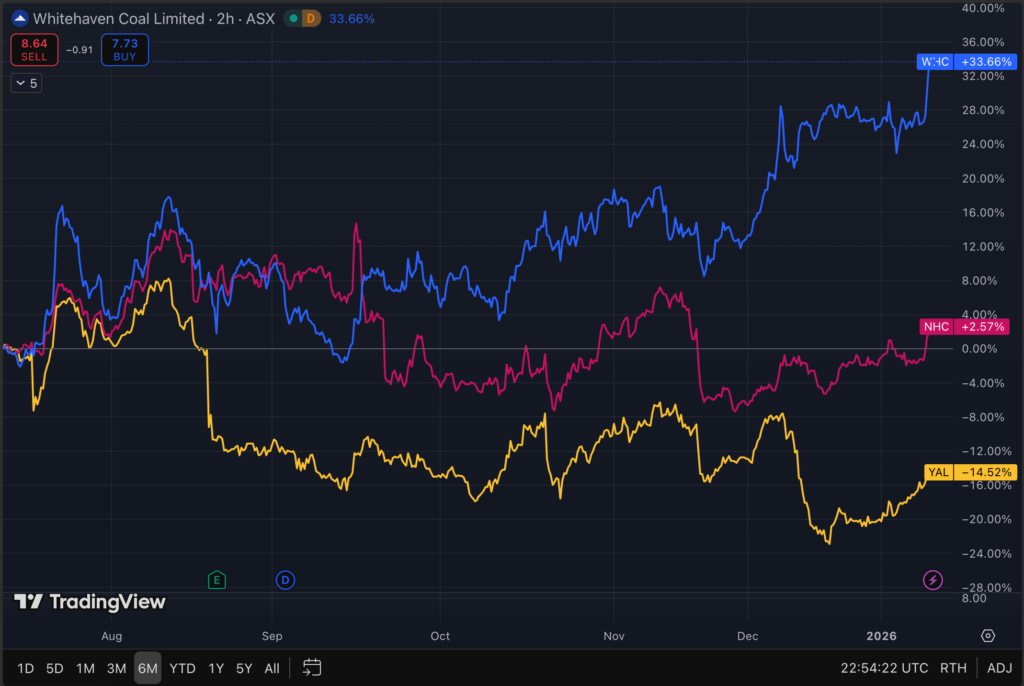
The Coal Trader’s Read – There’s really no telling as to how bad of shape Blackwater & Daunia are in post-acquisition. BHP likely didn’t turn them over after spending a lot of capital on productivity the past couple of years. As long as high-CV thermal markets can maintain at prevailing price levels, or higher, over the next year or two, Whitehaven will continue to generate healthy FCF and be able to allocate capital towards boosting met productivity. We should think of Whitehaven as a long-term investment opportunity. Paul Flynn is unlikely to restart the buyback anytime soon. Then need the capital to get their sea legs beneath them for the long journey of dealing with the growing pains that comes with doubling in size.

Thermal Coal News

Asian LNG prices surged due to supply risks, especially from the Middle East, driving increased demand. JKM LNG for June rose to USD 10.75/MMbtu. Geopolitical tensions, including Russian attacks in Ukraine and potential Iran-Israel conflict, fueled buying. Spot LNG demand remained strong amid restocking and a heatwave. However, global prices fell on eased supply concerns. Norwegian flows were robust at 334mcm/day. Coal prices edged up marginally. LNG demand likely to rise 2.6% to 5.4m tonnes this week. The Coal Trader’s Read – Geopolitical issues has put a floor beneath seaborne thermal prices for now. This is helpful during shoulder season. Hopefully hot summer weather can drawdown natural gas inventories and put additional pressure on coal demand. More Here


The Chinese thermal coal market has stabilized and rebounded this week, with imported thermal coal prices rising in response. Indonesian 3800 kcal Panamax thermal coal reached US$57-58/ton offshore, with small ship coal priced at US$54/ton. However, sentiment in coastal and port thermal coal markets is weak, with few transactions and poor demand. International thermal coal prices have weakened due to tepid buying, despite supply contractions. Indonesian thermal coal prices increased following a rise in the Chinese market, but trading activity remains limited. Newcastle thermal coal prices dipped due to limited impact from the Middle East conflict.


Coal shipment increases in the Far East disrupt eastbound container rail transport, dropping by nearly half in March. Tariffs tripled and delays reached three months. Inventory shortages risk production reduction. Fertilizer supply delays impact sowing season. To boost shipments, container train length can increase by 40% from April. The Coal Trader’s Read – With the LME sanctions and redistributions of Russian exports all pointing towards China, the Russian railroad system is going to be put to the test. More Here


OTEKO, a Russian port operator, will decline Delo’s bid for its Taman terminal in the Black Sea. Amidst changing ownerships, Delo aims to buy to ease coal prices. OTEKO blames rail capacity for shipment delays, while Delo criticizes high prices. OTEKO denies selling, citing issues with railroad capacity. Delo’s founder aims to lower coal prices. OTEKO’s terminal, with 70M metric tons capacity, mainly handles coal. Delo’s owner plans talks with the government for terminal management. Coal deliveries to OTEKO’s terminal are halted, affecting exports. More Here


In the 15th week of 2024, US coal production was 7.498 million short tons, down 30.7% from the same week in 2023. Year-to-date, production is down 17%. The Coal Trader’s Read – US thermal production YTD is down 16.6%, I expected this trend to continue and the magnitude of declines to probably grow.


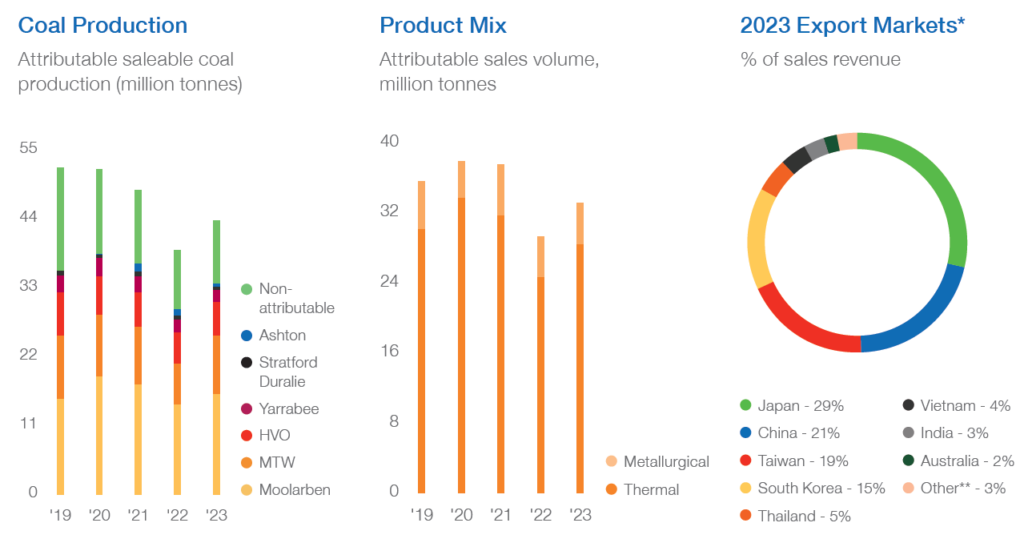
Yancoal Australia Ltd. produced 8.8 million tons of saleable coal from January to March 2024, a 49.2% increase from the previous year. Thermal coal sales volume reached 7.3 million tons, up 55.3%. Operations include NSW’s Mount Thorley Warkworth, Moolarben, Stratford/Duralie, Ashton, and QLD’s Yarrabee, plus Hunter Valley Operations (HVO) and Middlemount coal mine JV. The company aims for 35-39 million tons of saleable coal production in 2024, up to 16.8% from 2023. Yancoal Australia Ltd. reports an average sales price of A$180 per metric ton from January to March 2024. Metallurgical coal is priced at A$334, up A$42 (14.4%), while thermal coal stands at A$159, down A$21 (11.7%), compared to the previous quarter. The Coal Trader’s Read – Yancoal is really a great dividend play for the Australian investor especially, but also for international investors.

Metallurgical Coal News

Neutral to Bullish: Spot PLV HCC prices are flat DoD at $254/mt on April 19, 2024, consolidating on the sharp rally over the past few days. May’s contract remains at $271/mt and June remains at $275/mt. The long-end of the forward remains in contango with December 2024’s contract at $288.00 (unch) and December 2025’s contract at $281/mt (unch). The Coal Trader’s Read – Coking coal spot and futures markets appear to be consolidating on the recent rally. There’s signs of HRC prices bottoming in India and hope for near term infrastructure spending in China to boot incremental demand. White goods in China continue to perform well.


Seaborne metallurgical coal market signals bearish trends for Q2, with fears of prices dropping below 2023 lows. Queensland prime coal supply to increase in Q2 post-wet season. Australia’s coal exports surged in February but met tepid demand, particularly from steelmakers in Europe, India, and Southeast Asia. Oversupply worsened with a major Australian producer offering spot cargoes. Platts’ coal price assessments plummeted, prompting lowered forecasts. India’s demand remains subdued due to election regulations. Semi-soft coking coal prices see relative strength. The Coal Trader’s Read – This article is obviously a few days old. Classic negative sentiment piece right at the bottom of the market. More Here


India’s coking coal imports diversify as Australian imports decline and Russian, US shipments rise. Rising energy inflation and geopolitical turmoil affect trade dynamics. Despite price factors favoring Russian coal, India’s import reliance on Australia persists due to challenges in Russian coal supply. Indian steel production is projected to rise, with continued heavy investments in the BF-BOF segment. India’s metallurgical coal imports remain promising, yet efforts to reduce import dependency with domestic coal use face technological hurdles. More Here


Bullish: The Chinese coking coal market is robust this week, driven by increased terminal demand and rising futures prices. Downstream coking companies and traders are actively purchasing raw coal, leading to sharp increases in quotations for some coal types in production areas. As the first round of coke price increases takes effect, market sentiment continues to improve. Additionally, as of April 19, the price of quasi-first-grade coke in Fenweiluliang remains stable, while in Rizhao, it has increased by 30 yuan/ton. Some coke companies have initiated a second round of price increases, further stimulating market activity. The Coal Trader’s Read – There’s market chatter of a second round of coke price increases. Need downstream steel demand to continue picking up.


Bearish: Mongolia’s coal production surged 21.5% to 8.21 million tonnes in March, driven by increased demand from China. First-quarter output reached 21.93 million tonnes, up 24.5% year-on-year. Most coal was exported to China via land border ports in Inner Mongolia.


Bullish: Coal exports from Queensland ports remained steady year-on-year but increased by 0.1% in March, reaching 16.19 million metric tons. DBCT exports declined by 13.7% to 4.53 million mt, while Hay Point increased by 1.6% to 3.41 million mt, and Abbot Point decreased by 2.2% to 2.62 million mt. Gladstone Port exports surged by 14.8% to 5.60 million mt. Japan received 39.8%, China 24.6%, India 15.9%, and South Korea 7.4%. Total shipments for January-March were 47.7 million mt. The Coal Trader’s Read – The anticipated material supply increase from Australia is still underperforming. This is where most pundits have been wrong.


China’s metallurgical coke exports surged by 22.6% to 2.41 million metric tons in Q1, with March exports reaching 900,000 mt, up 26.3% year-on-year and 34.3% month-on-month. Coal exports for the same period soared by 57.5% to 1.39 million mt, with March at 380,000 mt, up 41.3% year-on-year and 65.2% month-on-month. The Coal Trader’s Read – these are not really material. I’m not worried about metallurgical coke turning into a flourishing export business.

Steel & Iron Ore News

Bullish: China’s steel mills are increasingly profitable due to lower production costs and rising steel prices. Mysteel Global reports that as of April 18, 48.48% of blast furnace mills are profitable, the highest since September. Production costs fell to their lowest since August 2023, while finished steel prices rose. Steel transactions surged by 33.6% in April, driven by increased demand and improved market sentiment. The Coal Trader’s Read – As finished steel prices rebound, blast furnace profitability increases. This is offset somewhat by higher raw material costs. It would be nice for iron ore price to underperform coking coal prices in the medium to long-term as more supply comes online. This could be a bullish catalyst for met prices going forward. So far its not happening but something to watch for.


Bullish: China’s blast-furnace steelmakers see profits rise, boosting production. Capacity utilization reaches 84.59%. Daily hot metal output rises to 2.26 million t/d. Government policies support domestic consumption. Steel prices increase, with rebar up 3.4% to Yuan 3,805/t. 48% of steelmakers are profitable, the highest since August. Increased production drives up iron ore demand, with daily consumption at 2.77 million t/d. Iron ore inventories rise to 93.6 million tonnes, lasting 33.9 days. The Coal Trader’s Read – This metric is ticking up, approaching the 90% bull market level.


Bullish: China’s Q1 production of major home appliances—air conditioners, washing machines, televisions, and refrigerators—increased year-on-year. Air conditioner production led, up 16.5% to 68.78 million units. Exports of air conditioners, washing machines, and refrigerators grew, with refrigerators showing the highest rise at 34.4%. Television exports slightly declined by 1.7%. The Coal Trader’s Read – This is good to see, downstream demand is good everywhere except residential real estate in China.


Bullish: India’s finished steel consumption grows by 13% to 136 million tonnes in 2023-24, driven by automotive and infrastructure sectors. Crude steel production rises 12.6% to 143 million tonnes. Government aims for 300 MT annual capacity and 160 kg per capita consumption by 2030. Finished steel consumption increases by 6% to 33 million tonnes in Jan-Mar FY24. Crude steel production reaches 37 million tonnes in the quarter, up 12.1% year-on-year. More Here


Bullish: Kirloskar Ferrous Industries Ltd (KFIL) reopens its mini-blast furnace at the Hiriyur steel mill in Kolkata after a shutdown on February 22 due to weak demand and low pig iron prices. The restart is deemed a strategic move for prudent operational management amid market fluctuations, prioritizing sustainability and efficiency. The Hiriyur mill has an annual crude steel capacity of 155,000 metric tons, a sinter plant producing 250,000 metric tons per year, and a 4MW captive power plant. The Coal Trader’s Read – Reopening’s like this point towards optimism in India.


Bullish: Europe’s steel industry requires 5 million tonnes/year of hydrogen to decarbonize, a process expected to take 20-25 years. Coking coal remains vital until then, despite high costs. Carbon capture (CCUS) must accelerate. Major projects may adopt hydrogen by 2026/27, but cost remains a barrier. Polish coal’s role is emphasized. CCUS could extend coal’s use for a century. The EU’s NZIA targets 50 million tonnes of CO2 storage by 2030, growing to 450mt by 2050. CCUS implementation needs hastening. The Coal Trader’s ReadHydrogen is a literal pipe dream. More Here


The US plans to increase import duties on steel from China to 25%, endorsed by AISI. China’s steel market has yet to react. In 2022, China exported 1,930 thousand tons of steel products to the US, decreasing to 1,730 thousand tons in 2023. In Jan-Feb 2024, cumulative exports were 260 thousand tons. Despite uncertainties, if exports to the US remain steady, monthly exports could reach 60-70 thousand tons. Chinese steel prices remain stable, showing little impact for now. The Coal Trader’s Read – Not much reaction in China re prices to the increased tariff news.


Bullish: Domestic prices of hot-rolled steel coils in India seem to have hit bottom after 7-8 weeks of decline, now at around $625, up $5 from the previous week. Prices may recover further. However, India’s export prices are expected to stay unchanged. If domestic prices rise, Indian HR coil exports may decrease, potentially leading to price recovery in the Asian market from May onwards.

Power & Energy Market News

Wyoming, Virginia, and Michigan lead in advancing nuclear energy, with Wyoming’s TerraPower project exemplifying proactive state support. Michigan committed $150 million for Palisades’ restart, while Virginia funds energy initiatives. States are adopting four nuclear policy pathways: lifting moratoria, including nuclear in clean energy standards, exploring development, and offering financial incentives. NASEO emphasizes the importance of state-specific policies to attract investment and jobs. The Coal Trader’s Read – The nuclear trends have rapidly reversed over the last 12 months. Something to keep an eye on. More Here